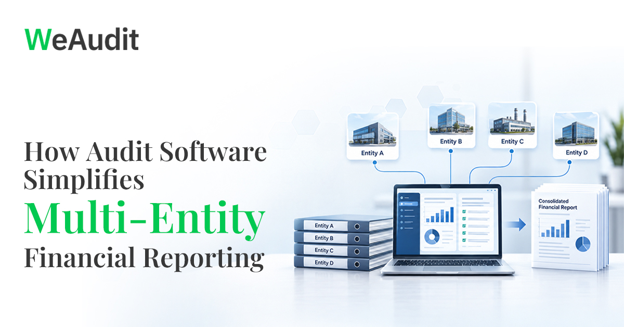
Managing financial reporting for one entity is complex enough. When multiple companies, subsidiaries, branches, or business units need to be reviewed together, the challenge goes beyond collecting numbers. Teams must bring together separate books, standardize reporting, reconcile inter-company information, maintain documentation, and coordinate reviews across entities. For organizations managing multiple companies, multi-entity consolidation can help create a structured group-level view while retaining visibility into individual entities.
For organizations handling multi-company financial reporting, these activities can quickly become dependent on spreadsheets, manual data transfers, and repeated validation. As the number of entities grows, maintaining a consistent and traceable reporting process becomes increasingly difficult.
Multi-entity financial reporting software can bring data collection, financial analysis, reconciliation, documentation, review, and reporting into a more consistent workflow. This gives teams a group-level view while retaining visibility into individual entities.
What Makes Multi-Entity Financial Reporting Challenging?
Multi-entity reporting becomes difficult when financial information is spread across different systems, teams, and files. The challenge is not simply combining figures; it is keeping information comparable, reconciled, documented, and reviewable.
Managing Separate Books and Financial Data
Each company may maintain its own accounting records, ledgers, financial statements, and supporting schedules. Collecting and validating this information manually becomes increasingly time-consuming as the number of entities grows, while also increasing the risk of missing data, duplicate files, and reporting delays.
When teams rely heavily on spreadsheets for these activities, comparing the benefits and limitations of audit software vs Excel can help determine whether a more structured workflow would be appropriate.
Different Reporting Formats and Accounting Practices
Entities may use different reporting structures, account classifications, or internal processes. Even reliable financial information can become harder to compare when it is presented differently.
A standardized reporting workflow helps teams work with information consistently while retaining entity-level visibility.
Consolidating Entity-Level Information
Creating a group-level reporting view often involves combining individual company reports into spreadsheets or working files. Repeated formulas, manual adjustments, and validation can make the process difficult to maintain as more entities are added.
Inter-Company Transactions and Balances
Transactions between companies within the same group require careful identification and review. Inter-company balances may need to be matched and investigated before group-level reporting is finalized.
Software can help identify and reconcile differences, but accounting treatment and final conclusions still require professional judgment.
Reconciliations Across Entities
Teams may need to compare balances and supporting information across several companies. Differences can result from timing, classification, incomplete entries, or inconsistencies in the underlying data.
A structured reconciliation workflow helps surface exceptions and direct attention to items requiring investigation.
Maintaining Consistent Audit Documentation
Managing separate spreadsheets, working papers, and review files for every entity can fragment documentation. As engagements expand, maintaining consistent supporting evidence and traceable audit documentation becomes more difficult.
A structured financial audit checklist can also help teams maintain consistency when reviewing key financial information and supporting documentation.
Coordinating Reviews Across Multiple Teams
Multi-entity engagements may involve auditors, finance professionals, reviewers, and client teams across different entities. Without a common workflow, questions, review notes, supporting documents, and follow-ups can be difficult to track.
How Audit Software Simplifies Multi-Entity Reporting
The value of multi-entity reporting software goes beyond producing a combined financial view. It brings financial data, analysis, reconciliation, documentation, and review into a more standardized workflow.
Rather than replacing professional judgment, audit software reduces repetitive preparation and helps teams apply a consistent approach across entities.
Centralized Data and Audit Documentation
A centralized workflow reduces dependence on separate files throughout an engagement. Teams can work with organized financial information and reporting outputs while retaining the entity-level context needed for investigation.
Standardized Reporting Across Entities
A consistent reporting structure makes it easier to compare financial information across companies, identify differences, and recreate recurring reports without starting from scratch for every entity.
Streamlined Inter-Company Reconciliation
Where reconciliation capabilities are available, software helps teams compare relevant balances and transactions systematically rather than relying entirely on manual spreadsheet matching. Differences can then be investigated and resolved through professional review.
Faster Ledger and Transaction Analysis
Audit software analyzes ledger data using predefined checks and highlights exceptions or unusual patterns for further investigation. Applying the same analytical approach across companies makes multi-entity reviews more consistent and reduces repetitive manual checks.
Features such as automated ledger scrutiny can help auditors analyze larger transaction populations systematically.
Consistent Working Papers and Audit Trails
Structured reports and analysis outputs support more consistent working-paper preparation and documentation. This is particularly useful when several entities are reviewed under the same engagement methodology.
Centralized Review and Team Collaboration
A shared workflow gives reviewers and engagement teams a common view of reporting outputs and identified exceptions, reducing the back-and-forth involved in coordinating reviews across separate files.
Financial Statement Review and Validation
Software can automate selected validation and analytical checks to help identify inconsistencies before reporting is finalized, allowing reviewers to focus more on significant exceptions.
Key Multi-Entity Reporting Tasks That Can Be Automated or Streamlined
The level of automation depends on the software, underlying accounting data, and workflow. However, several recurring activities can be streamlined:
| Task | Manual Approach | With Audit Software |
|---|---|---|
| Entity-wise data collection | Collect and organize separate files from each company. | Bring available company data into a structured entity-level workflow. |
| Ledger analysis | Review large ledger populations manually or through spreadsheets. | Analyze transactions systematically and highlight exceptions. |
| Inter-company reconciliation | Match balances and transactions across companies manually. | Support structured comparison and reconciliation where available. |
| Financial statement review | Prepare and compare statements separately for each entity. | Generate standardized outputs and review entity-level or group-level information in one workflow. |
| Working papers | Build schedules and supporting files manually. | Generate organized reports and analysis outputs to support documentation. |
| Review notes | Track questions and follow-ups across emails and files. | Centralize review information where review-management capabilities are available. |
| Entity-level reporting | Combine company outputs into spreadsheets and validate manually. | Generate entity-level Financial Reports, Ledger Scrutiny, or Cost Center Reports from available company data. |
How Audit Software Improves Accuracy and Control Across Entities
The value of multi-entity audit software extends beyond faster reporting. A standardized workflow improves three key areas:
- Consistency: Standardized procedures and review processes help teams apply similar checks and analytical approaches across entities.
- Control: Reducing repetitive data transfers, spreadsheet manipulation, and multiple file versions makes reporting workflows easier to manage and review.
- Visibility: Exception analysis and structured audit trails help teams identify unusual balances, transactions, movements, or reporting differences and trace them to the relevant analysis or supporting information.
Together, these capabilities provide a more consistent and traceable way to review information across entities while preserving the professional judgment needed to assess findings and reach conclusions.
What to Look for in Multi-Entity Audit Software
Choosing audit software for multiple entities requires more than checking whether a platform produces group-level reports. The right solution should support the broader workflow around data, analysis, reconciliation, documentation, and review.
Multi-Entity Data Management
Look for a structured environment that organizes multiple companies while retaining clear entity-level visibility.
ERP and Accounting Software Integration
When evaluating best audit management software, consider compatibility with existing ERP and accounting systems, along with structured file imports where required.
Automated Reconciliation
Reconciliation capabilities should reduce repetitive matching work and make differences visible for investigation rather than simply producing another combined report.
Ledger Scrutiny and Exception Analysis
Features such as ledger scrutiny, exception identification, duplicate detection, and unusual-transaction analysis can help auditors prioritize areas requiring further attention.
Understanding different ledger scrutiny techniques can help audit teams determine which analytical procedures are relevant to their review objectives.
Working Papers and Review Management
Reporting outputs should support audit documentation and working papers, while review workflows should make observations, questions, supporting information, and follow-ups easier to manage.
Role-Based Access and Audit Trails
For larger teams, appropriate access controls and traceable activity help maintain accountability over financial and audit information.
The best multi-entity financial reporting software should fit into the existing accounting and audit workflow rather than create another isolated reporting process.
How WeAudit Supports Multi-Entity Audit Workflows
WeAudit's Multi-Entity Consolidation capability allows companies to be grouped under an entity and provides entity-level Financial Reports, Ledger Scrutiny, and Cost Center Reports using available company data. This gives teams a structured starting point for reviewing information across companies without manually combining separate company outputs.
Teams can select the relevant Indian financial year, generate available entity-level reports, review the resulting information, and download the outputs for further review and documentation. The feature currently follows the Indian financial year from 1 April to 31 March.
The workflow can be complemented by WeAudit's broader audit capabilities, including ledger scrutiny, financial analysis, reconciliation, and structured report generation. Its accounting-data workflow supports Tally ERP/Prime, Zoho Books, and Excel imports.
Teams can use entity-level reporting as a starting point and examine company-level information where further investigation is required. Professionals remain responsible for validating source data, applying the appropriate accounting treatment, and reaching final conclusions.
Who Benefits Most From Multi-Entity Audit Software?
- CA firms managing multiple client entities can reduce repetitive company-by-company reporting and give engagement teams a consistent starting point for review.
- Groups with multiple subsidiaries can bring financial information from related companies into a common entity-level reporting workflow while retaining company-level visibility.
- Finance and controllership teams can use standardized reporting outputs to support financial analysis, management review, and group-level discussions.
- Businesses with multiple branches or entities can reduce spreadsheet-heavy reporting and create a more consistent view of financial information across operations.
- Audit teams handling high-volume engagements can spend less time on repetitive data preparation and more time investigating exceptions, evaluating evidence, and applying professional judgment.
FAQs
What is multi-entity financial reporting?
Multi-entity financial reporting is the process of collecting, reviewing, and presenting financial information from multiple companies, subsidiaries, branches, or business units within a group. It provides a group-level view while retaining the ability to examine individual entities.
What are the challenges of multi-entity financial reporting?
Common challenges include collecting data from separate books, standardizing reporting formats, combining entity-level information, reconciling inter-company balances, maintaining documentation, and coordinating reviews across teams.
Can audit software automate multi-entity reconciliations?
Audit software can automate or streamline parts of reconciliation, such as comparing available information and identifying differences. Reconciliation conclusions, accounting treatment, and resolution of exceptions still require professional review.
Does multi-entity consolidation eliminate inter-company transactions automatically?
Not necessarily. Software can help identify, compare, and reconcile inter-company information, but the appropriate accounting treatment, adjustments, and final conclusions require professional assessment.
How does audit software help maintain consistency across entities?
It standardizes recurring procedures, reporting structures, analytical checks, and documentation workflows. Applying a consistent process makes it easier to compare results and identify differences requiring further investigation.
What should businesses look for in multi-entity audit software?
Businesses should look for multi-entity data management, accounting-system integration, reconciliation, ledger scrutiny, exception analysis, financial reporting, working-paper support, review workflows, access controls, and audit trails.
What reporting period does WeAudit's Multi-Entity Consolidation use?
WeAudit's Multi-Entity Consolidation feature currently follows the Indian financial year from 1 April to 31 March.
Conclusion
Multi-entity financial reporting becomes difficult when companies are managed through separate data files, spreadsheets, reconciliations, and review processes. Audit software can bring these activities into a more standardized workflow, reducing repetitive data handling while improving visibility across companies.
The right financial reporting software for multiple entities should support more than combining financial information. It should help teams analyze ledger data, review financial statements, reconcile information, organize documentation, collaborate on reviews, and identify areas requiring professional attention. Cost centre analysis can also form part of this broader financial review where teams need visibility into costs across entities or business units.
The goal is not simply to combine numbers. It is to create a consistent process from entity-level data to analysis, reconciliation, documentation, review, and group-level reporting—with appropriate professional judgment at every stage.
That is where well-designed audit software can make multi-entity financial reporting more manageable, repeatable, and review-ready.
Disclaimer: The information contained in this article is provided for general informational purposes only and does not constitute professional, financial, statutory or legal advice. Readers should not act or refrain from acting on the basis of any content included herein without seeking appropriate professional advice on the specific topics discussed.